Updated on 2/17/206 – After reading some recent studies I have decided to drop my protein from 145g to 110g to hopefully prevent any long term kidney issues.
As you may recall during my fatty liver diagnosis appointment, I received a lot of generic and not very helpful advice. I was told to eat a Mediterranean/low-fat diet.
Well first things first, that statement was contradictory in and of itself.
The Mediterranean diet actually includes quite a bit of healthy fat. Your body also needs fat to regulate hormone levels.
Low-fat diets were the rage in the ’90s when companies started marketing things as “low fat” and making up for the taste with added sugar. I see that as a correlation to why we have so much fatty liver today.
Another diet often recommended for reducing liver fat is a ketogenic diet.
While there have been studies that show very low carb diets (around 100g of carbs per day) will start to decrease fat in the liver as quickly as a few days, I personally have a very hard time getting the macros to even out without eating too much saturated fat.
When I have tried keto in the past I have also been unable to get past the headaches induced by the “keto flu.”
Carbs aren’t the big bad boogie man if you are lifting heavy weights and exercising frequently. You just need the right kind of carbs, the ones with fiber.
So with this in mind, I have slowly adapted my diet to be a modified Mediterranean diet. It is higher in protein and has moderate carbs of around 4% to 50% of my daily caloric intake. I try to get around 145g 110g of protein per day and anywhere from 30% to 35% healthy fats.
Let me further break down the macros for you.
3 Rules for the “Lean Liver” Diet
Rule 1: Protein Anchor
Protein does two huge things for the fatty liver person. First, it provides satiety, making you feel full for longer. Secondly, it is critical for muscle growth. The more muscle you have the more glucose your body can soak up (as we will discuss in rule 2).
Try to get at least 25- 30 grams or more protein per meal.
Rule 2: Fructose Elimination (The Liver Shield)
Table sugar is 50% glucose and 50% fructose. Fructose can also be found in fruits and is mostly processed by your liver. If you are in a caloric surplus and have too much fructose in your system, your liver cannot process it all and stores the extra as fat.
Your muscles use glucose for energy via glycolysis. They can also store excess glucose in the form of glycogen. The more muscle you have the more glucose your body can handle without negative side effects.
While fruits are not the devil, try to avoid the ones that are low on fiber and high on sugar. This is especially true of fruit juice which is just as bad as a soda. Absolutely avoid anything with a bunch of added sugar like sodas, ice cream, or processed sweets.
Rule 3: Chewable Fats (Satiety)
Olive oil and the Mediterranean diet are almost synonymous.
While this is true and olive oil can be a great healthy fat option, it is easy to over consume unless you are very conscious with how you weigh your foods. This is why I choose to minimize my use of oils and focus on fats that you need to chew, like olives, nuts, and avocados.
Eating a handful of nuts makes me feel a lot more full than taking a shot of olive oil.
A Typical Day of Eating (The “Show Me” Section)
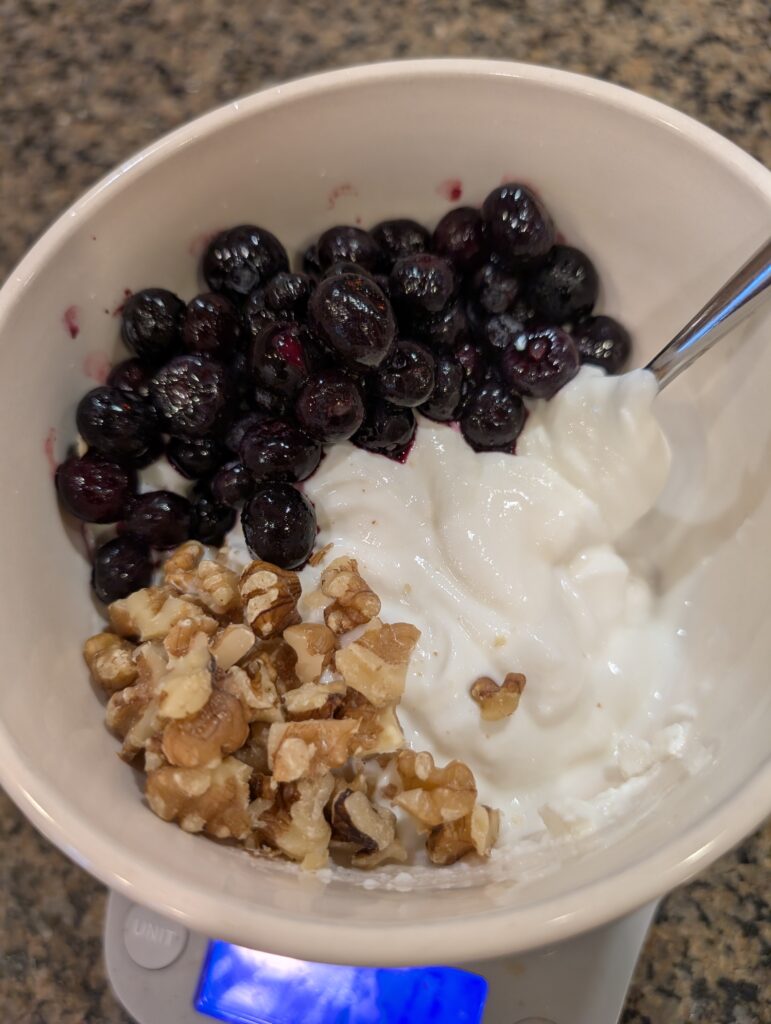
Breakfast: ~370 calories, 36g protein, 23g net carbs, 15g fat
Non-Fat Plain Greek Yogurt bowl with a half-serving of berries, a ½ oz of nuts, and an ounce of Catalina Crunch Protein cereal.
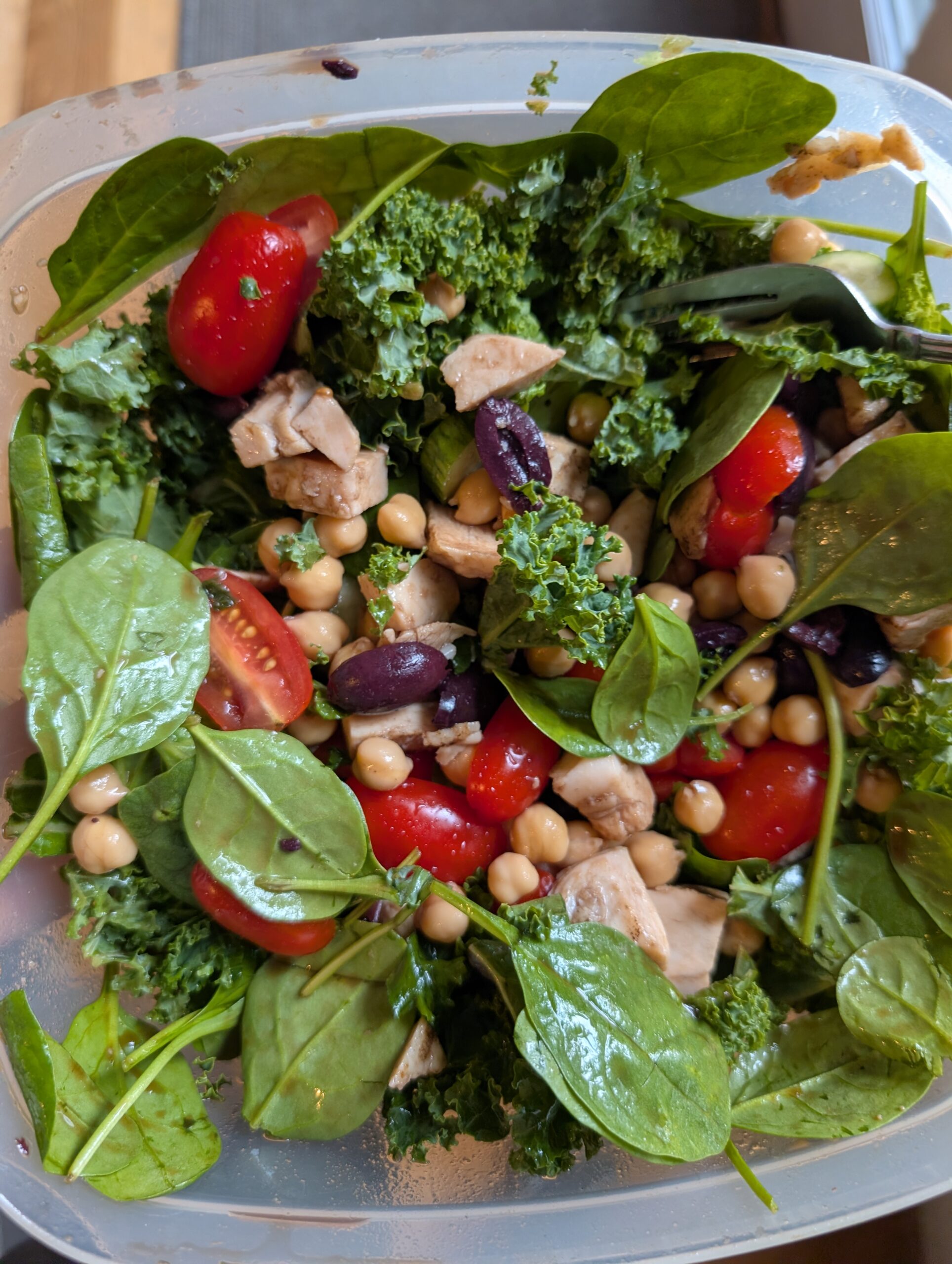
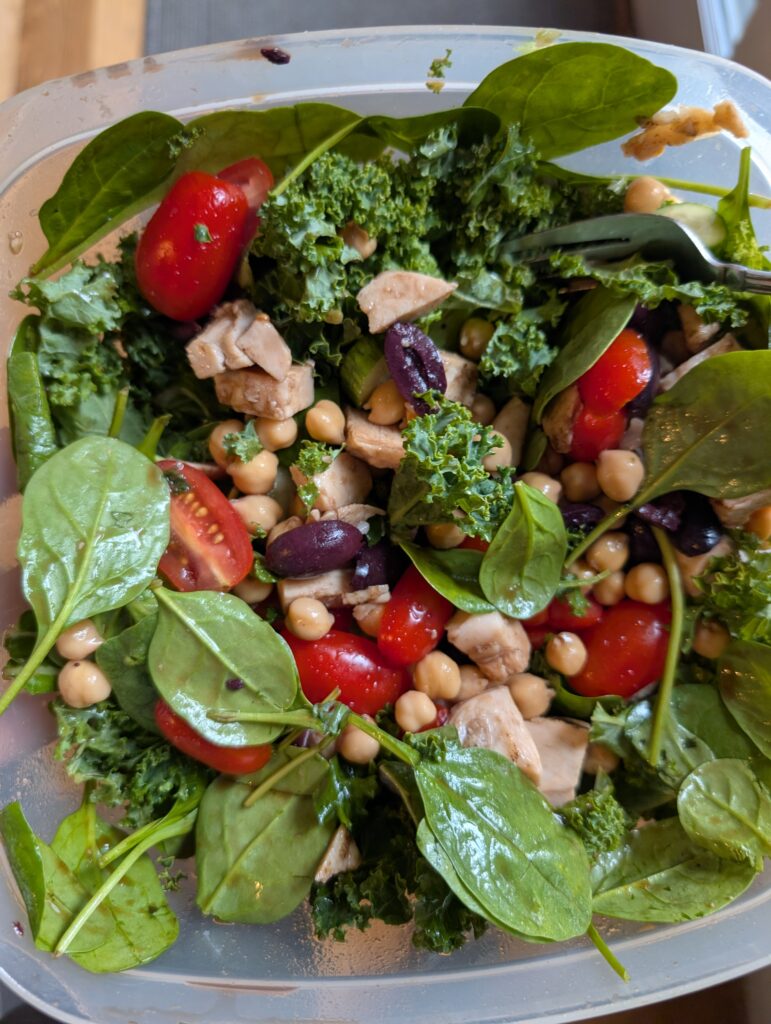
Lunch Option 1 (High Protein) ~700 calories, 50g protein, 47g net carbs, 27g fat
The “Big Salad” of Kale and Spinach with chicken or salmon, olives, legumes, and other fresh veggies (cucumbers, cherry tomatoes, peppers), avocado, topped with balsamic vinegar. slice of whole grain bread with smart-balance butter
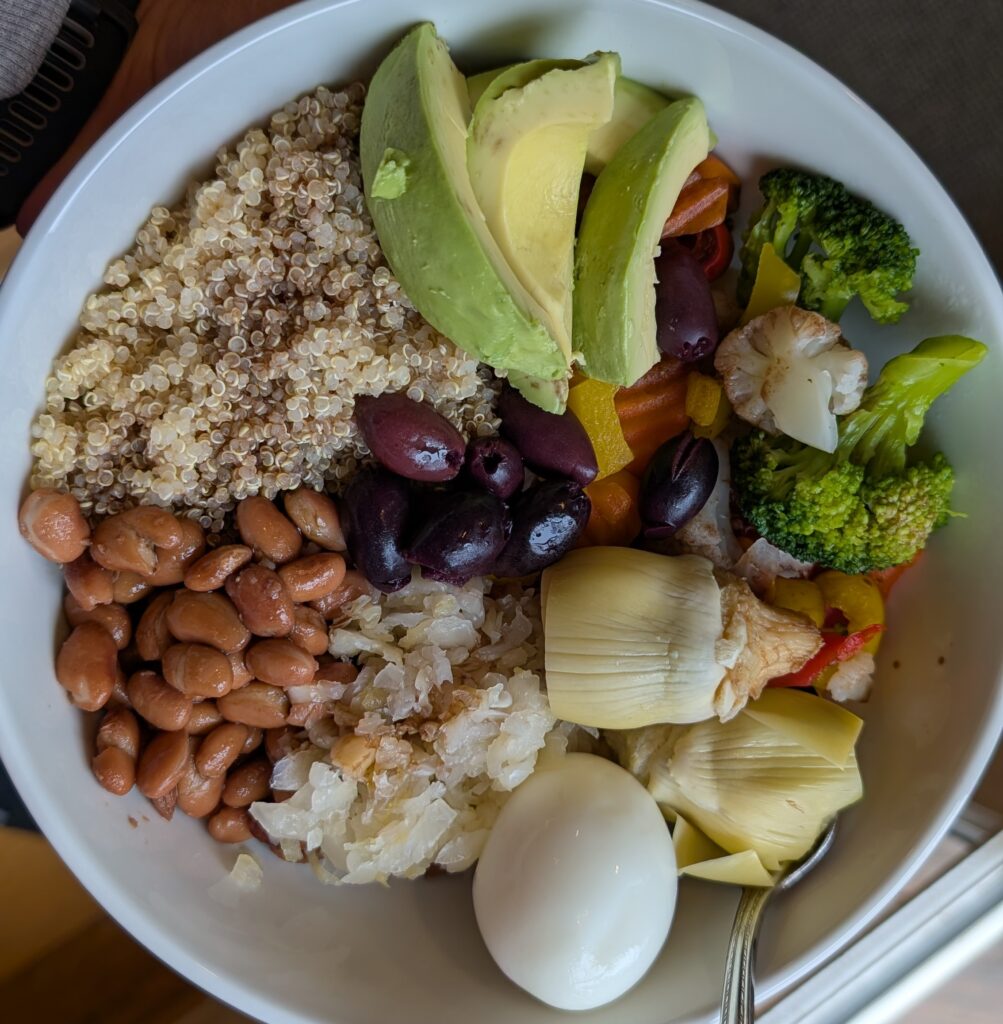
Lunch Option 2 (Adequate Protein): ~700 Calories, 32g Protein, 80g carbs, 30g fat, 27g fiber
This lunch bowl is higher in carbs, but lower in protein by preference. You can always decrease the carbs by reducing the quinoa/beans and increase healthy fats with more avocado or adding olive oil. It comprises of Quinoa, Beans, Eggs, Kalamata Olives, Sauerkraut, Cruciferous Veggies, artichoke hearts, avocado.
Dinner: ~650 calories, 49g protein, 56g net carbs, 16g of fat
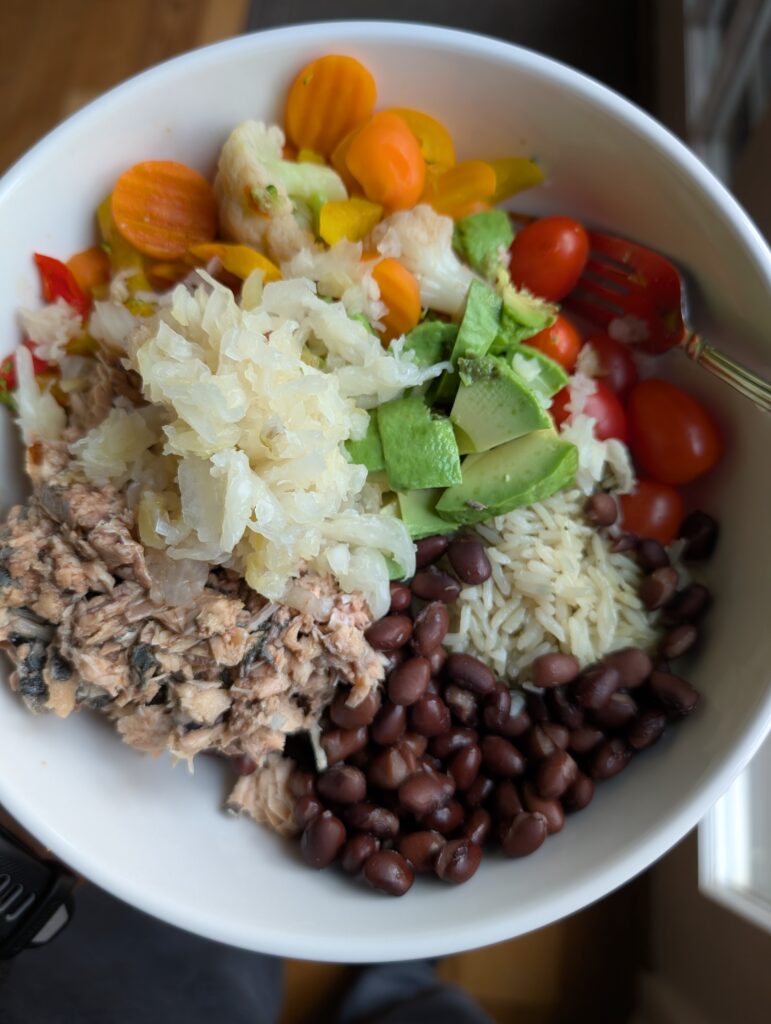
Boneless skinless chicken breast, beans, small portion of rice, veggies (broccoli, cauliflower, carrots, bell pepper), avocado, and fresh sauerkraut. Dark Chocolate for dessert. Note, Since adopting lower protein targets I have just lowered the portion size of my meat at dinner time.
Snack: ~300 calories, 21g protein, 35g net carbs, 8g fat
Tart Apple (Granny Smith or Pink Lady) and peanut butter protein bar
A “Cool” Trick
If you precook your starch (potatoes, rice, pasta) and cool it down in the refrigerator, it creates more resistant starch. This lowers the glycemic impact of the carbohydrate and acts a bit like the GLP-1 drugs do by keeping you fuller longer.
I learned all this over the last few months and I stopped guessing at the grocery store. I now know which foods to buy and which to leave behind thanks to my Grocery System. Get your copy to eat better this week!