Want to watch an animated version of this article? check out the YouTube video
One of the most frustrating moments of my diagnosis was the confusion. I stood on the scale and saw a number that was technically “normal.” I looked in the mirror and could faintly see my ribs. I wore size 32 jeans.
And yet, my ultrasound showed a liver that was swollen and full of fat.
If you are reading this, you may be in the same boat. You might be asking the question that haunted me for weeks: “How can I have fatty liver if I’m not fat?”
The medical community calls this “Lean MASLD” (Metabolic Dysfunction-Associated Steatotic Liver Disease). The internet calls it being a “TOFI” (Thin Outside, Fat Inside).
But the best explanation I found, and the one that finally helped me stop feeling like a medical anomaly, is the concept of the Personal Fat Threshold.
The Bathtub Analogy
This concept, popularized by diabetes researcher Dr. Roy Taylor, changed everything for me. Imagine your body’s ability to store fat under your skin (subcutaneous fat) is a bathtub.
- Some people have a “Olympic Swimming Pool” sized bathtub. They can gain 50, 60, or even 100 pounds. Their body keeps storing that energy safely under the skin. They might be obese, but their metabolic markers (blood sugar, liver enzymes) might stay normal for a long time because the tub hasn’t overflowed yet.
- You and I have a “Thimble” sized bathtub. Our genetics determined that we don’t have much storage space under our skin.
Here is the kicker: It doesn’t matter how big the tub is. It only matters if it overflows.
Because I have a “small tub,” I didn’t need to gain 100 pounds to get sick. I only needed to gain 10 or 15 pounds of “extra” energy. Once my small tub was full, that energy had nowhere to go. It spilled over into the “living room,” my liver and pancreas.

How I Overflowed My Tub (The “Healthy” Diet Trap)
Looking back, it is glaringly obvious how I flooded my system. I wasn’t eating fast food for every meal, but I was mechanically destroying my liver with two specific weapons: Sugar and Sedentary Living.
1. The “Healthy” Lunch Myth
Growing up, and even into adulthood, I ate what I thought was a responsible lunch.
- Peanut Butter & Jelly Sandwich
- A Banana
- Fruit-on-the-bottom Yogurt
It sounds innocent. But metabolically? It’s a grenade. That meal is essentially pure sugar and fructose. The bread breaks down to glucose instantly. The jelly, banana, and sweetened yogurt are loaded with fructose.
Since I have a “lean” genetics, my body couldn’t store that energy as body fat. So, my liver had to deal with it.
2. The Weekend Binge
I had a “sweet tooth” that I thought was harmless because I stayed thin.
- I needed dessert after every dinner.
- I had a love affair with donuts (two per weekend was standard).
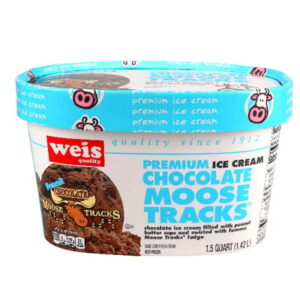
- The Smoking Gun: Premium Moose Tracks Ice Cream.
I would easily consume 1,000 calories of Moose Tracks (loaded with fudge and peanut butter cups) two or three times a week.
Because I wasn’t visibly gaining massive weight, I thought I was getting away with it. I wasn’t. I was just pouring buckets of sludge into a bathtub that was already full.
The Muscle Factor: Why It Caught Up With Me
In my early 20s, I could get away with some of this because I was lifting weights and walking daily. Muscle is a glucose sink. The more muscle you have, the more “drainage” your bathtub has.
Then life happened. We lost our family dog (my walking partner). We had two young children. Life got chaotic, and I stopped moving.
I went from active to sedentary, right at the same time I was hitting the Moose Tracks the hardest.
- High Input: Sugar/Fructose.
- No Drain: Low Muscle Mass (Sarcopenia).
- Result: The liver became the storage unit of last resort.
The “Re-Comp” Solution
This is why generic weight loss advice fails us. If a doctor tells a 300-pound man to “lose weight,” they are right. He needs to empty the pool.
But if a doctor tells me to “lose weight” when I’m already BMI 23.5, they are missing the point.
I don’t need to starve myself to 130lbs. I need to build a bigger bathtub.
My strategy for reversing Lean Fatty Liver isn’t about counting calories; it’s about Body Re-composition:
- Stop the Overflow: Cut the fructose (Moose Tracks, Oreos and “Fruit” Yogurts).
- Build the Sink: Prioritize protein and resistance training to rebuild the muscle I lost.
What I did First
I stopped guessing and started treating my diet like a prescription. I swapped the “healthy” sugar bombs for foods that actually support my liver and muscle.
I compiled the exact shopping list I used to start this process—focusing on high protein and low fructose.
It’s not about eating less. It’s about eating right for your metabolic type.
To continue reading about my fatty liver reversal journey, check out my Elastography results.